
Our team of highly trained Physiotherapists are all registered with the College of Physiotherapists of Ontario.
Our physiotherapy clinic in Ottawa offers a variety of treatment techniques including but not limited to the ones listed below:
- Back and neck pain
- Sprains and strains
- Arthritic pain
- Joint pain
- Sports injuries
- Fibromyalgia
- Chronic pain conditions
- Repetitive strain injuries
- Sciatica, Herniated disc.
- Tingling in extremities
- Tendinitis
- Headaches
- Post concussion
- TMJ disorders
- Vertigo (BPPV)
- Pre and Post surgical rehabilitation
Our physiotherapy services are different because we treat the cause not the symptoms, we offer one on one, hands-on treatment with your therapist and we deliver the results you want.
Luis Ramirez recieved the award for BEST Physiotherapist in Ottawa by the Ottawa Health and Wellness expo leadership in health awards 2020.
We don’t treat body parts, we treat and take care of people.
McKenzie Assessment by Accredited Therapists
The McKenzie Method is a biopsychosocial system of musculoskeletal care emphasizing patient empowerment and self-treatment. This system of diagnosis and patient management applies to acute, subacute and chronic conditions of the spine and extremities. It offers a reliable and practical approach that focuses on “what patients need” and not on “what therapists want to do”.
- Backed by years of research, evidence and clinical practice
- Known to show results in as little as two to three visits
- Assessment-driven and individualized treatment plans
- Active, not passive, therapy strategies for more successful management
- Cost efficient – treatment without expensive tests or procedures
- Non-invasive – no needles, no scalpel
- Self-directed and managed – we work with you and teach you
- Preventative – lifelong knowledge and skills
The SFMA and FMS
The Selective Functional Movement Assessment (SFMA) is a movement based diagnostic system which systematically finds the cause of pain – not just the source – by logically breaking down dysfunctional movement patterns in a structured, repeatable assessment. It is used to classify movement patterns and direct manual therapy and therapeutic excercise interventions.
The Functional Movement Screen (FMS) is a tool used to identify risk of injury by checking imbalances in mobility and stability during seven fundamental movement patterns. These movement patterns are designed to provide observable performance of basic locomotor, manipulative and stabilizing movements by placing an individual in extreme positions where weaknesses and imbalances become noticeable if appropriate mobility and motor control is not utilized. Once these deficiencies have been identified through the FMS Screen, a program of corrective exercises is then developed with the goal of preventing musculoskeletal injuries.

Functional Dry Needling (FDN)
Is the use of sterile acupuncture needles to reset muscles and restore function. Most patients will not even feel the needle penetrate the skin, but once it has and is advanced into the muscle, the feeling of discomfort can vary from patient to patient. The patient may only feel a cramping sensation locally or they may feel a referral of pain to other areas which they are seeking treatment.
Reproduction of pain can be a helpful diagnostic indicator of the cause of the patient’s symptoms.
Patients soon learn to recognize and even welcome this sensation as it results in deactivating the trigger point, thereby reducing pain and restoring normal length and function of the involved muscle. Typically positive results are apparent within 2-4 treatment sessions but can vary depending on the cause and duration of the symptoms, with very few side effects.

Therapeutic Excercise
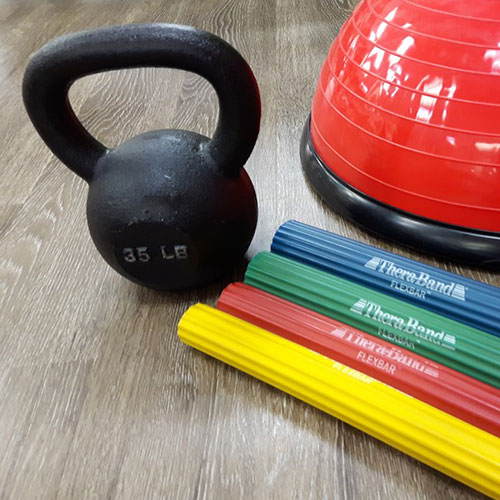
Therapeutic exercise is a key component of any rehabilitation program and should be included as part of the concurrent care of any patient. It is a wide range of physical activities that focuses on correcting specific problems, alleviating pain, restoring function and strength, recovering from injuries, improving gait and balance, and promoting health and wellness.
Types of exercises: range of motion, strengthening, balance and coordination, relaxation and endurance.
Manual Therapy
It is a hands-on technique that applies a specific manual force to the body, in order to improve the mobility and function of the individual. The forces are applied taking into consideration a comprehensive assessment that determines the safety of the technique; the classification of the injury; the loading strategy; and bio psychosocial issues aroused during the interaction with the clinician.
Forces in the physiotherapy- manual therapy literature is divided as “thrust manipulation ” (grade 5)and ” Non Thrust manipulation”(Grade 1-4). There is a grading scale to administer such forces described by Maitland:
- Grade 1: Small amplitude rhythmic oscillating mobilization in early range of movement.
- Grade2: Large amplitude rhythmic oscillating mobilization in midrange of movement.
- Grade 3: Large amplitude rhythmic oscillating mobilization to point of limitation in range of movement.
- Grade 4: Small amplitude rhythmic oscillating mobilization at end range of movement.
- Grade 5: (Thrust manipulation) Small amplitude quick thrust at end range of movement. It often causes a cavitation that is no more than bubbles of gas imploding within the joint as the pressure rises. This feature produces a pop or cracking sound on synovial joints.